
When we think about exercise, we often picture long workouts or structured gym sessions. For many older adults, that idea can feel overwhelming or unrealistic. The good news is that movement does not need to happen all at once to be effective. This is where the concept of exercise snacks comes in.
Exercise snacks are short bursts of purposeful movement spread throughout the day. These small moments of activity can help increase overall movement, support strength and balance, and reduce long periods of sitting—all of which are important for maintaining mobility and independence as we age.
Why Exercise Snacks Matter
As we get older, energy levels, joint comfort, and confidence with movement can fluctuate. Breaking exercise into short, manageable segments can feel more achievable and less fatiguing, while still providing meaningful benefits. Regular movement throughout the day can help:
- Maintain muscle strength
- Support balance and coordination
- Improve circulation and energy levels
- Reduce stiffness and discomfort from prolonged sitting
Over time, these small efforts add up and contribute to better functional capacity for daily activities.
What Does an Exercise Snack Look Like?
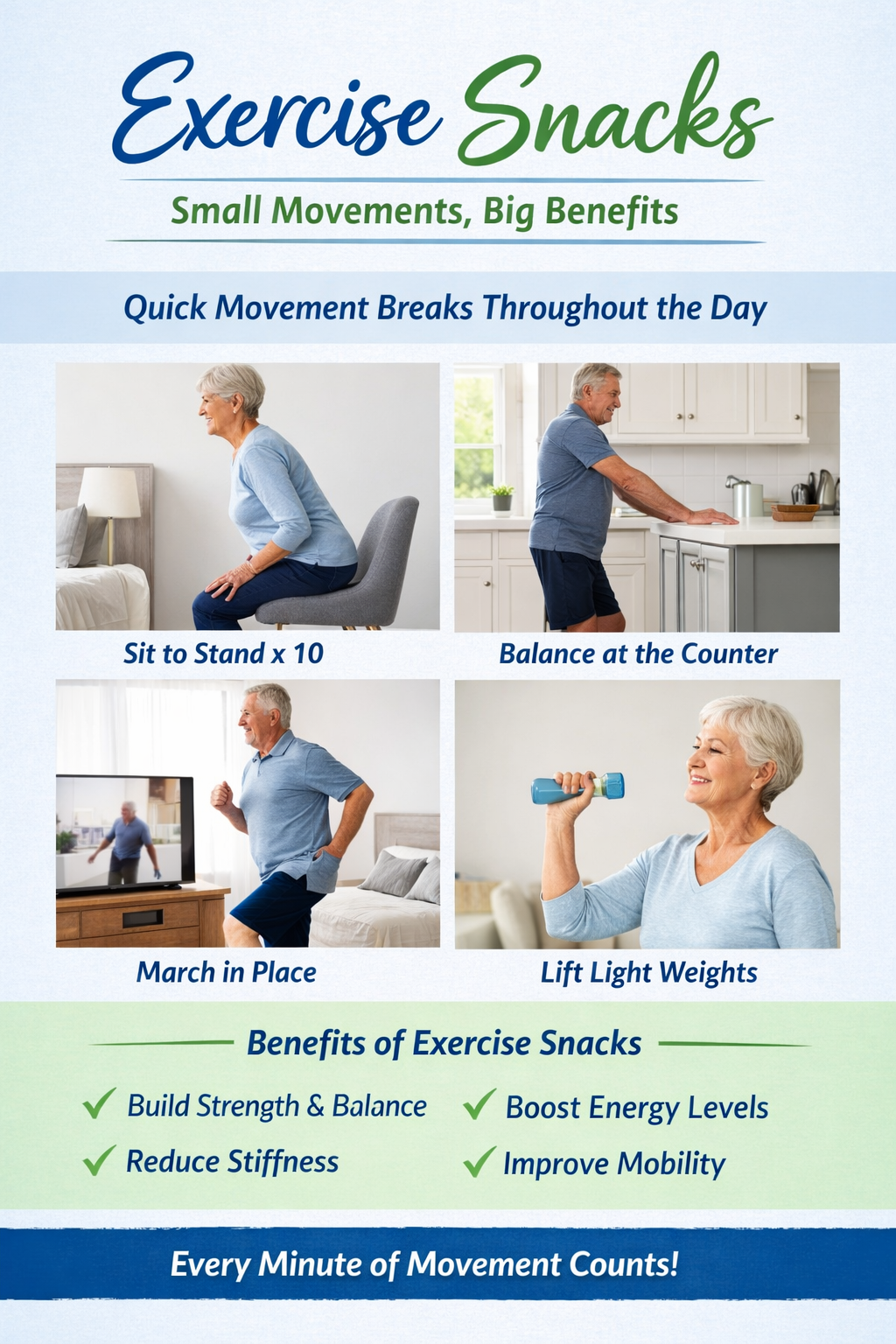
Exercise snacks are simple and can be done in the comfort of your home. Examples may include:
- Standing up from a chair 5–10 times
- Practicing balance while holding the kitchen counter
- Marching in place during a television commercial
- Gentle strengthening exercises using household items
The key is consistency rather than intensity. Movements should feel safe, purposeful, and appropriate for your individual abilities.
Making Movement a Part of Daily Life
One of the advantages of in-home physiotherapy and kinesiology is the ability to integrate exercise directly into daily routines. When movement is linked to everyday activities, it becomes more practical and easier to maintain over time.
Exercise snacks are not about pushing limits—they are about creating regular opportunities for movement that support long-term mobility, confidence, and quality of life.
If you’re unsure where to start or how to tailor exercise safely, guidance from a physiotherapist or kinesiologist can help ensure movements are appropriate and effective for your needs.
Leave a Reply