
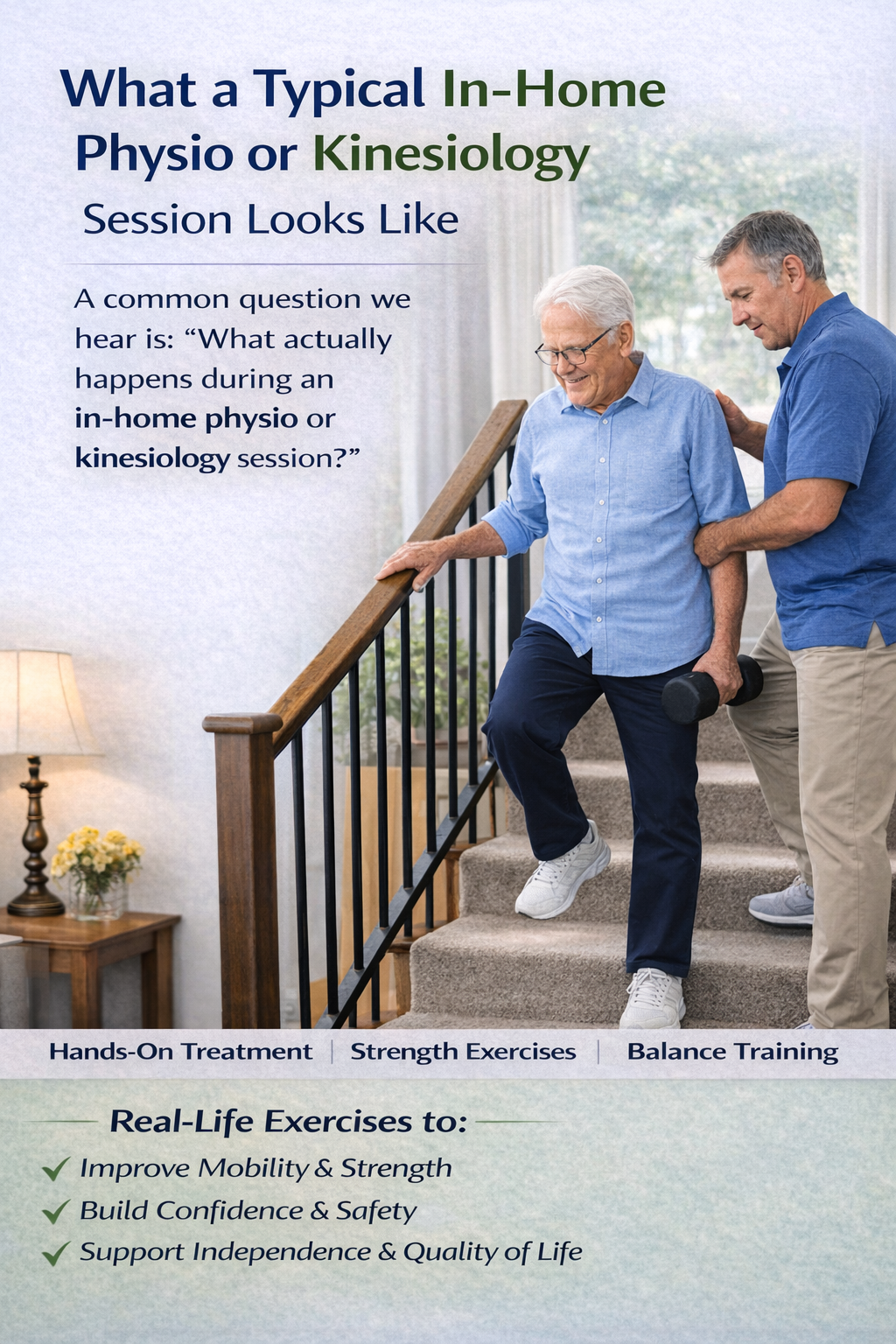
A common question we hear is: “What actually happens during an in-home physio or kinesiology session?”
The answer is simple: it looks a lot like real life. Just with intention, structure, and progression.
In-home care is designed to help people maintain or improve mobility, strength, and confidence as movement becomes more challenging over time.
We Start With How You’re Moving That Day
Each session begins with a brief check-in and movement assessment. We’ll talk about how you’re feeling, what’s been difficult, and what’s been going well since your last visit.
This allows us to:
- Adapt the session to your current energy and comfort level
- Respect fluctuations in stiffness, fatigue, or pain
- Progress exercises safely when appropriate
Mobility changes from day to day, and sessions are always adjusted accordingly.
Hands-On Treatment When Appropriate
For physiotherapy sessions, treatment may include manual therapy and physical modalities when indicated. This can help reduce pain, improve joint mobility, and prepare the body for movement.
Depending on your needs, this may include:
- Joint or soft tissue mobilization
- Gentle hands-on techniques to reduce stiffness
- Modalities such as heat, ice, or other therapeutic tools
Hands-on care is usually combined with exercise to support both comfort and function.
Strength Training Using Familiar Equipment
Strength plays a critical role in maintaining independence, balance, and confidence. In-home sessions often use simple, familiar tools such as:
- Chairs for lower-body strength and transitions
- Counters or sturdy surfaces for support
- Household items (or whatever item your practitioner has in their goody bag) for resistance
Exercises are tailored to help with real-life tasks like climbing stairs, carrying groceries, or getting up from the floor.
Balance, Walking, and Functional Mobility
Mobility training focuses on the movements people rely on every day. This may include:
- Standing balance and postural control
- Safe walking practice inside or outside the home
- Stair negotiation and transitional movements
- Safe use of mobility aids during functional tasks
Training in your own environment helps improve safety and carryover into daily routines.
Simple Strategies for Staying Active Between Sessions
Rather than overwhelming home programs, we often introduce short, manageable movement strategies that fit naturally into your day.
These may include:
- Brief strength or balance exercises during routine activities
- Movement “snacks” spread throughout the day
- Practical tips for moving more confidently and efficiently
Small amounts of consistent movement can lead to meaningful long-term improvements.
Education and Confidence Building
Education is a key part of every session. Understanding how and why to move a certain way helps build confidence and independence.
We focus on:
- Safe movement strategies
- How to recognize helpful versus unhelpful discomfort
- Ways to pace activity and avoid setbacks
Ending With a Clear Plan
Before each session ends, we review what was done and what to focus on next. This keeps goals clear and expectations realistic, while supporting steady progress over time.
The Big Picture
A typical in-home physio or kinesiology session is not about perfection. It’s about:
- Maintaining strength and mobility
- Supporting balance and daily function
- Building confidence in movement
- Promoting long-term independence
By working in the home, care is practical, personalized, and directly connected to real life.

Leave a Reply