
Why “One-Size-Fits-All” Fall Prevention Programs Miss the Mark
Exercise Prevents Falls — But Only When It’s Done Properly
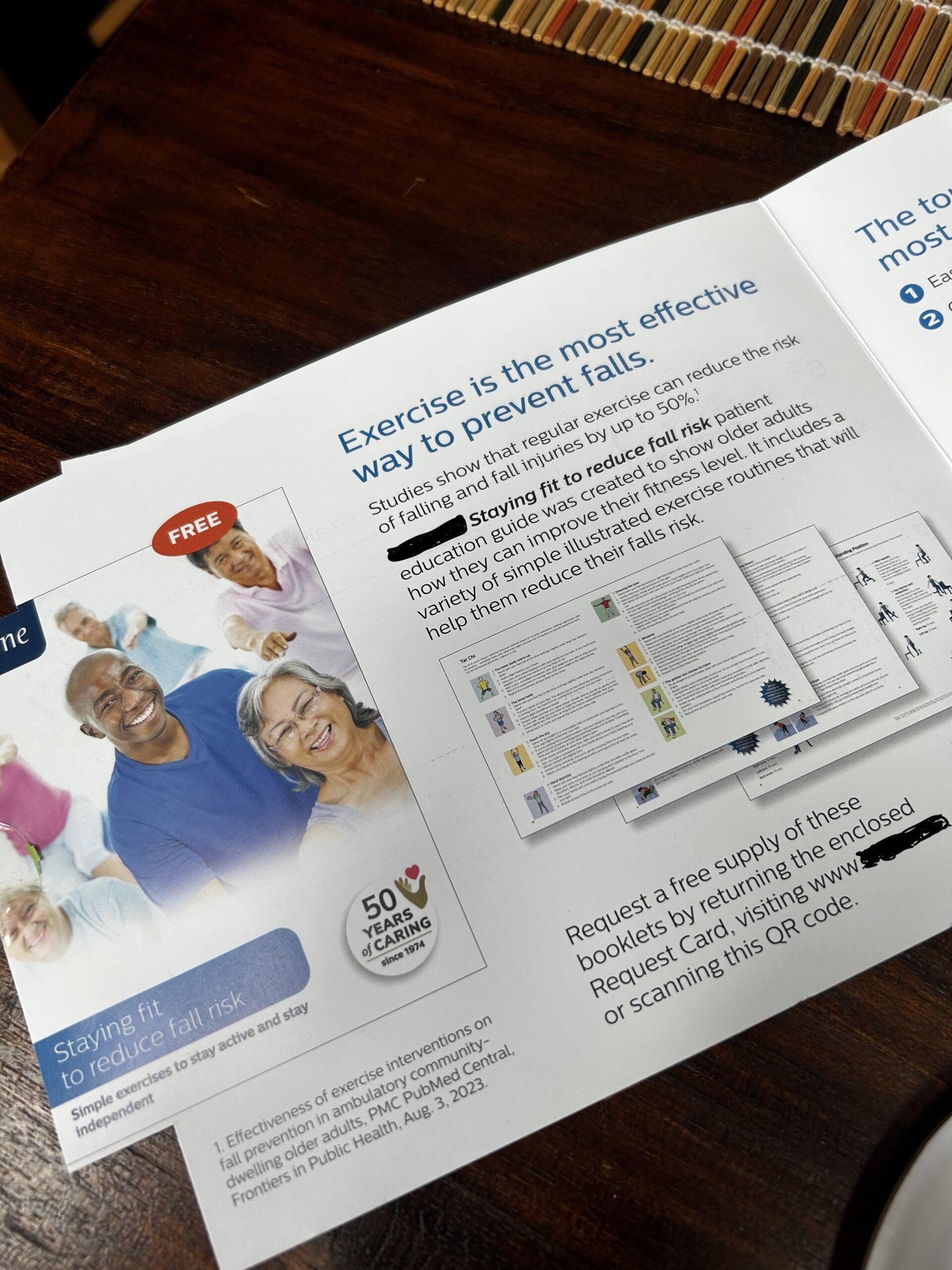
As a physiotherapist working with older adults every day, I was frustrated to receive a recent mail advertisement claiming that a generic exercise booklet can help prevent falls in seniors.
The message sounds reassuring:
“Exercise is the most effective way to prevent falls.”
That part is true.
But the implication that a standardized, non-individualized exercise pamphlet can meaningfully reduce falls risk for all older adults is misleading — and potentially unsafe.
Fall prevention is far more complex than handing out the same exercises to every senior, regardless of their health status, mobility level, medical history, strength, balance, cognition, or functional abilities.
Older Adults Are Not One Group
Who exactly is this exercise guide intended for?
- A 65-year-old who lives independently and who does not use any assistive devices for ambulation?
- Or an 85-year-old living with frailty, mobility impairments, caregivers, multiple medications, and several mobility aids throughout the house?
These individuals have entirely different physical capacities, risks, and rehabilitation needs.
For one person, the exercises may be far too easy and ineffective.
For another, they may be too difficult and unsafe.
This is the problem with “cookie-cutter” exercise programs: they assume all older adults are the same.
They are not.
The Research Matters — But So Does Applying It Correctly
The advertisement referenced a PubMed research article supporting exercise for fall prevention.
And to be clear — the research itself is valid. Exercise absolutely helps reduce falls risk.
However, the issue is how these findings are being generalized to all older adults without acknowledging the study population the research actually applies to.
The study specifically excluded individuals with:
- Parkinson’s disease
- Alzheimer’s disease
- Stroke
- Multiple sclerosis
- Cancer
- Vision impairments
- Cognitive impairments
- Recent fractures
- Other chronic age-related conditions
The researchers were transparent about these exclusion criteria, which is standard and appropriate in research.
But this matters because many older adults living in the community do have one or more of these conditions.
So while the research supports exercise for fall prevention, we cannot assume that a generic exercise booklet based on these findings will automatically be safe, appropriate, or effective for every senior receiving it in the mail.
Older adults with complex medical conditions, frailty, mobility impairments, or cognitive challenges often require individualized assessment, tailored programming, supervision, and exercise modification to exercise safely and effectively.
“Moderate Intensity” Means Different Things to Different People
The research also states that fall prevention exercises should be performed at a moderate intensity.
But moderate intensity is relative.
For one person, moderate effort may mean walking uphill for 30 minutes.
For another, it may mean standing unsupported at the kitchen counter for 60 seconds.
Exercise must be prescribed relative to the individual’s current abilities, tolerance, balance confidence, strength, endurance, and medical condition.
That requires assessment, clinical reasoning, progression, and monitoring — not a generic pamphlet.
Effective Fall Prevention Requires Appropriate Challenge
One of the most important findings from the research was this:
Exercises must provide a moderate or high challenge to balance in order to prevent falls.
This is critical.
If balance exercises are too easy, the body does not adapt.
If they are too difficult, the risk of injury increases.
Successful fall prevention programs need to challenge people just enough to stimulate improvement safely.
That balance is highly individualized.
Fall Prevention Is More Than a Few Exercises
Research consistently shows that effective fall prevention programs should be:
- Multi-component
- Progressive
- Functional
- Ongoing
- Individualized
They should address:
- Strength
- Balance
- Mobility
- Endurance
- Reaction time
- Confidence
- Functional tasks
- Environmental risks
The same research also notes that exercise needs to be performed consistently — often at least two hours per week on an ongoing basis — to meaningfully reduce falls risk.
That requires guidance, progression, accountability, and personalization.
Older Adults Deserve Better Than Generic Exercise Sheets
As healthcare professionals, we should absolutely encourage older adults to move more.
But we should also be honest:
Not all exercise is equally effective.
A generic exercise guide is not the same as a personalized rehabilitation program.
Research supports exercise for fall prevention — but effective programs must be individualized to the person’s medical history, functional level, balance capacity, and overall health status.
Older adults deserve individualized care that meets them where they are, challenges them appropriately, and helps them improve safely and meaningfully.
Because preventing falls is not about handing someone a booklet.
It’s about understanding the person in front of you.
If you’d like to learn more about individualized fall prevention strategies — or if you’re looking for a rehabilitation program tailored specifically to you or your loved one — reach out to our team. We’re here to help older adults stay mobile, independent, and confident safely.
Leave a Reply