
Understanding the Four Key Components of Balance
When most people think about balance, they picture someone standing on one leg without wobbling. While that is certainly one aspect of balance, the truth is that balance is a complex skill involving several systems working together to keep us upright, moving safely, and responding to our environment.
Understanding the different types of balance can help explain why some people are at greater risk of falling and why effective balance training needs to address more than just strength alone.
1. Anticipatory Balance: Preparing for Movement
Anticipatory balance is your body’s ability to prepare for movement before it happens.
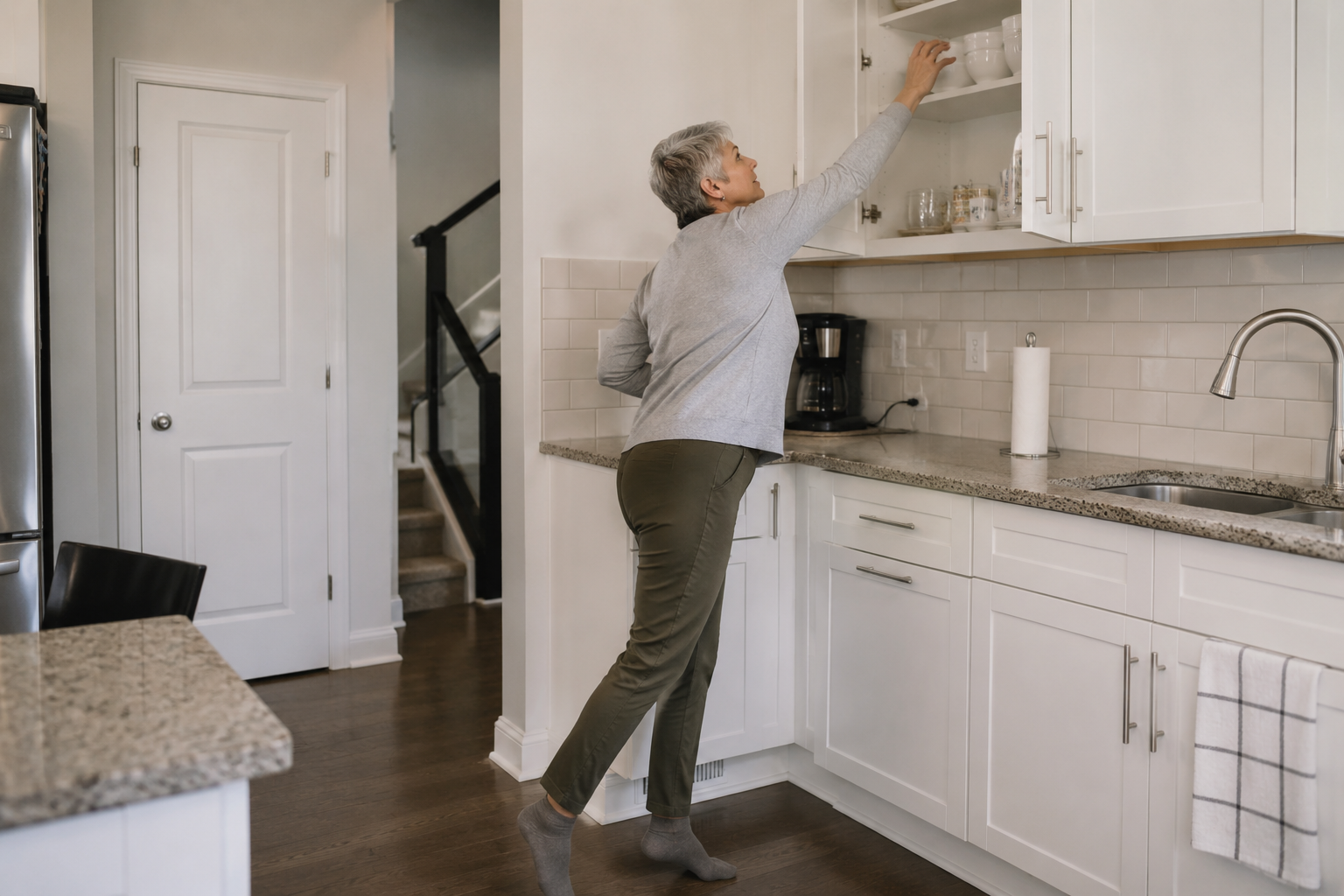
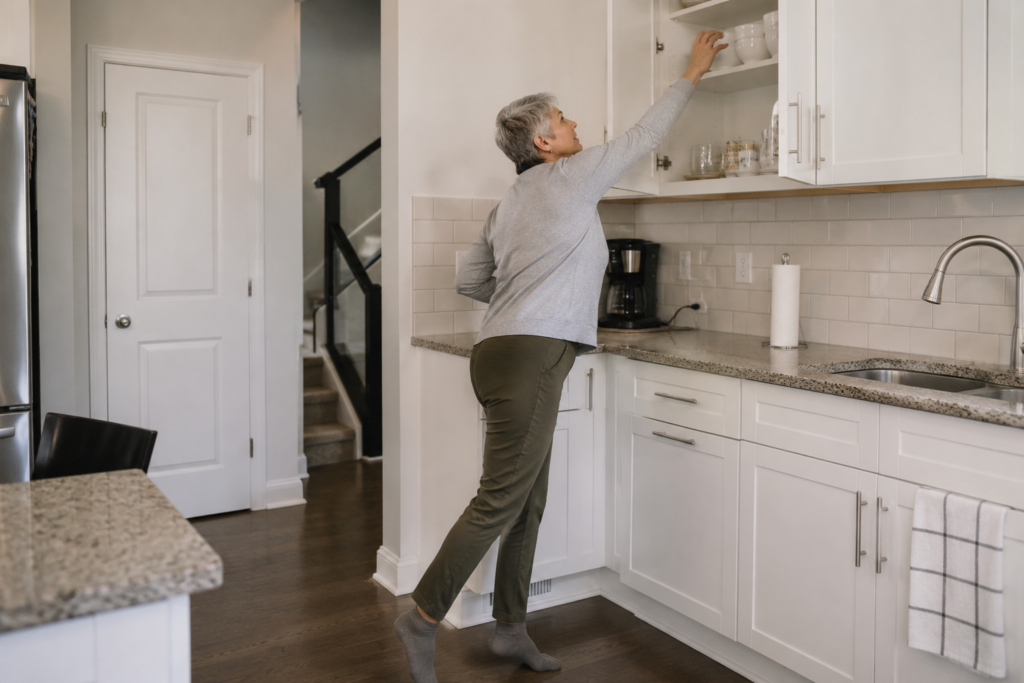
For example, before you step onto a curb, reach for something on a high shelf, or stand up from a chair, your body automatically shifts and activates muscles to maintain stability. These adjustments happen without you even thinking about them.
When anticipatory balance is impaired, everyday activities can feel less stable and may increase the risk of losing balance during routine movements.
How we can help:
Our physiotherapists and kinesiologists assess how your body prepares for movement and design exercises that improve strength, coordination, and confidence during daily activities such as reaching, bending, and transitioning from sitting to standing.
2. Reactive Postural Control: Recovering When Balance Is Lost
Reactive balance is your body’s ability to recover after an unexpected disturbance.
Imagine someone bumps into you in a crowded space, your dog suddenly pulls on the leash, or you trip on an uneven sidewalk. Your body must react quickly to regain stability and prevent a fall.
As we age, reaction times and stepping responses can become slower, making it harder to recover from these unexpected challenges.
How we can help:
We incorporate safe, progressive exercises that challenge your balance and improve your ability to react to slips, trips, and unexpected movements. Practicing these responses in a controlled environment can help reduce fall risk and improve confidence.
3. Sensory Orientation: Using Information From Your Environment
Maintaining balance depends on information from three important systems:
- Vision (what you see)
- Vestibular system (the balance organs in your inner ear)
- Proprioception (feedback from your muscles, joints, and feet)
Your brain constantly combines information from these systems to determine where your body is in space.
If one system isn’t working optimally (such as reduced sensation in the feet, vision changes, or vestibular dysfunction) balance can become more challenging, especially in dim lighting or on uneven surfaces.
How we can help:
Our team identifies which sensory systems may be contributing to balance difficulties and develops targeted treatment strategies to improve sensory awareness, stability, and confidence in different environments.
4. Dynamic Gait: Staying Stable While Walking
Dynamic gait balance refers to your ability to remain stable while moving.
Walking through a busy grocery store, turning quickly, stepping over obstacles, climbing stairs, or carrying groceries all require dynamic balance.
Difficulties with dynamic gait can lead to slower walking speeds, reduced confidence, and an increased risk of falls.
How we can help:
We assess how you move during walking and functional activities, then create individualized programs that improve mobility, walking efficiency, obstacle negotiation, and overall safety in the community.
Balance Training Should Be Personalized
Every person experiences balance challenges differently. One individual may struggle with reactions to unexpected movements, while another may have difficulty because of sensory changes or reduced confidence when walking.
That’s why effective balance training starts with a comprehensive assessment to identify which components of balance need attention.
At Julie Hjelm Physiotherapy, we provide personalized physiotherapy and kinesiology services designed to improve balance, mobility, and confidence. By addressing the specific factors contributing to instability, we help our clients reduce their risk of falls and stay active doing the things they enjoy most.
If you’re concerned about your balance or have noticed changes in your mobility, we’re here to help. You can book a 15 minute free consultation here.
Leave a Reply