
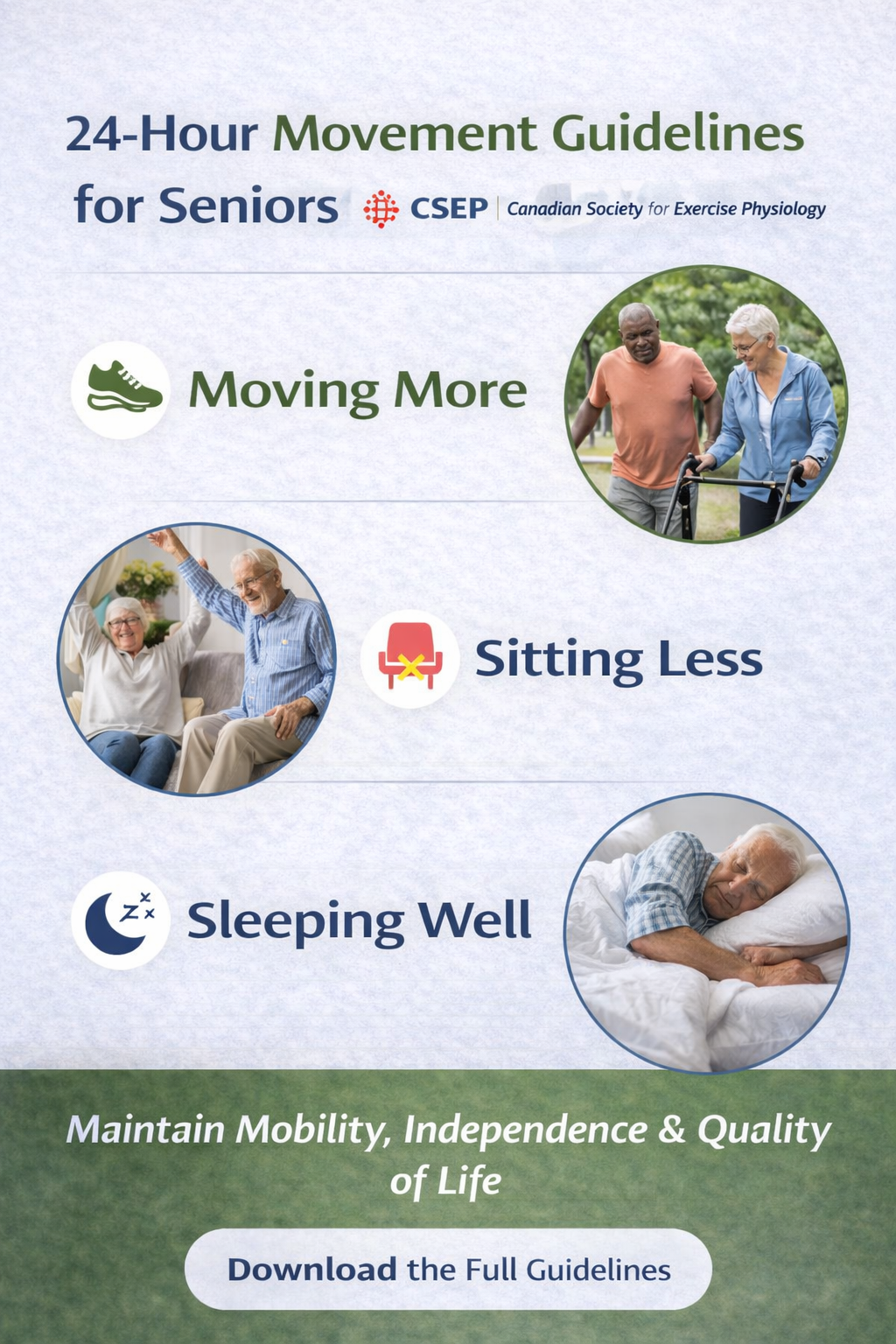
Understanding the 24-Hour Movement Guidelines for Adults 65+: A Simple Framework for Healthy Aging
As we age, maintaining health isn’t only about exercise sessions — it’s about how we move, rest, and recover throughout the entire day.
The Canadian Society for Exercise Physiology (CSEP) developed the 24-Hour Movement Guidelines for Adults Aged 65+ to help older adults understand how physical activity, sedentary time, and sleep work together to support overall health and independence.
These evidence-based guidelines provide a simple, realistic framework that anyone can follow — whether you are active, returning to movement after illness or injury, or simply looking to maintain mobility and quality of life.
Below is an overview to help you understand what the recommendations mean in everyday life.
Why “24-Hour Movement” Matters
Health is influenced by everything we do across a full day — not just exercise.
The guidelines recognize three equally important pieces:
✅ Moving more
✅ Sitting less
✅ Sleeping well
Together, these habits help support:
- Strength and balance
- Mobility and independence
- Brain health and mood
- Fall prevention
- Energy levels for daily activities
For many older adults, the goal is not athletic performance — it is maintaining functional capacity and continuing to do the activities that bring meaning and enjoyment to life.
The Three Key Recommendations
1. Move Every Day
Older adults should aim for at least 150 minutes per week of moderate-to-vigorous physical activity, in addition to regular daily movement.
This can include:
- Walking
- Strength exercises
- Balance training
- Functional movements like stairs or sit-to-stands
- Gardening or household activities
The guidelines also emphasize strength and balance activities at least twice per week, which are essential for reducing fall risk and maintaining independence.
2. Reduce Sedentary Time
Long periods of sitting can negatively affect circulation, strength, and energy levels — even for people who exercise regularly.
Simple strategies include:
- Standing up every 30–60 minutes
- Short walking breaks
- “Exercise snacks” throughout the day
- Performing light tasks between seated activities
Small, frequent movement adds up significantly over time.
3. Prioritize Good Sleep
Adults aged 65+ should aim for 7–8 hours of quality sleep per night.
Good sleep supports:
- Recovery and healing
- Memory and cognition
- Balance and coordination
- Daytime energy
Consistent sleep routines and regular daytime movement often improve sleep quality naturally.
What This Means in Real Life
One of the most encouraging aspects of the guidelines is that they are flexible and achievable.
You do not need a gym membership or complicated equipment. Movement can happen:
- At home
- In familiar environments
- At a comfortable pace
- With exercises adapted to individual abilities
In my work providing in-home physiotherapy and kinesiology services, we often build programs directly around these principles — integrating strength, balance, and mobility into everyday routines.
The goal is simple: helping you maintain independence and quality of life for as long as possible.
Access the Full Guidelines
I encourage you to explore the full document created by the Canadian Society for Exercise Physiology.
👉 Download the 24-Hour Movement Guidelines for Adults 65+ here:
A Gentle Reminder
Every person’s health journey is different. If you are unsure where to begin or have experienced mobility changes, pain, or recent health challenges, individualized guidance can make movement safer and more effective.
Small changes, introduced gradually and consistently, can make a meaningful difference over time.
Leave a Reply