
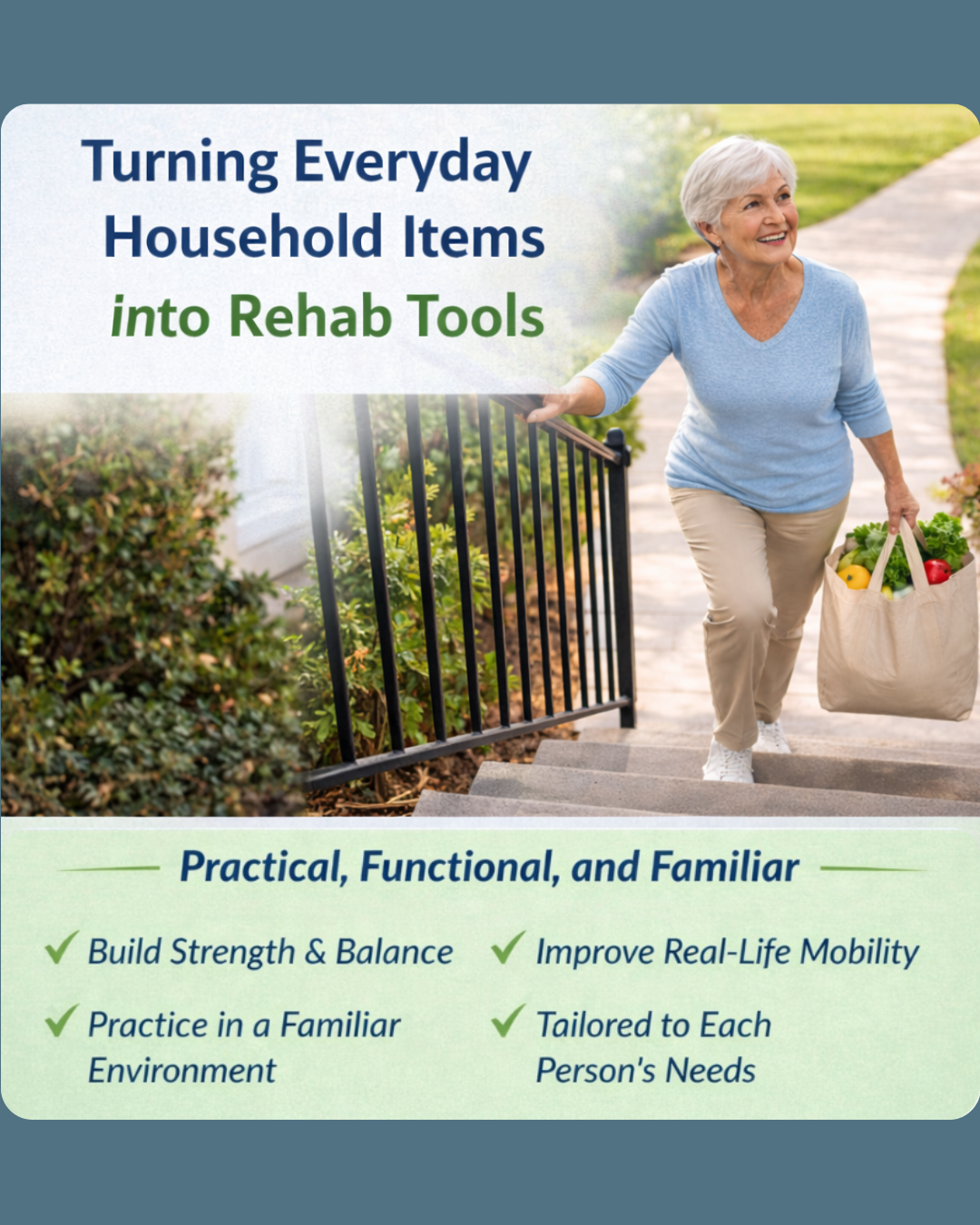
Effective rehabilitation doesn’t necessarily require a gym or specialized equipment. In fact, some of the most meaningful progress happens when exercises are performed using the very items people interact with every day. In-home physiotherapy and kinesiology allow rehabilitation to be practical, familiar, and directly connected to daily life.
Why Everyday Items Matter in Rehabilitation
One of the biggest challenges with exercise programs is carryover, taking what’s practiced during a session and applying it independently throughout the week. When rehabilitation uses household items, exercises feel more relevant, easier to remember, and more likely to be continued.
Using familiar objects also helps reduce intimidation. Many seniors feel more confident practicing movements at home with items they already know how to use, rather than unfamiliar gym equipment.
Turning the Home into a Functional Rehab Space
Every home offers built-in opportunities for therapeutic movement. For example:
- Chairs become tools for strengthening legs, practicing sit-to-stand transfers, and improving control during transitions.
- Kitchen counters or sturdy tables provide support for balance exercises and standing strength work.
- Stairs are ideal for safe, progressive training of leg strength, coordination, and confidence.
- Household items, such as water bottles or cast-iron pots, can be repurposed to support safe and effective strengthening.
These tools allow exercises to be tailored to each person’s abilities and progressed safely over time.
Real-Life Training for Real-Life Movement
Rehabilitation is most effective when it mirrors the movements required in daily life. Practicing tasks such as standing from a chair, reaching into cupboards, or stepping up onto a stair directly supports independence and fall prevention.
By training in the home, we can also identify and address environmental challenges such as furniture layout or commonly used spaces that may impact safety and mobility.
Building Confidence Through Familiarity
For many older adults and individuals living with neurological conditions, familiarity is key. Working within the home environment often reduces anxiety and builds confidence, making it easier to engage fully in rehabilitation and maintain consistency between sessions.
Practical, Sustainable Progress
The goal of in-home physiotherapy and kinesiology is not just improvement during sessions, but sustainable progress over time. When exercises are simple, accessible, and connected to everyday routines, they are more likely to become lasting habits.
If you or a loved one are unsure how to move safely or how to adapt everyday items for exercise, guidance from a physiotherapist or kinesiologist can help ensure movements are both effective and appropriate.
Leave a Reply